
Home
About us
Passion for sustainable building!
Contact
Nederlands
Request a quote
Our services
Projects
Knowledge base
Google-rating: 5.0 from 5 reviews★★★★★
Financing an extension can be done in several ways: with savings, by increasing your mortgage, with a construction deposit or with a personal loan.
A free, no-obligation quote tailored to you in just a few clicks. You finish on the quote page, where everything is already filled in.
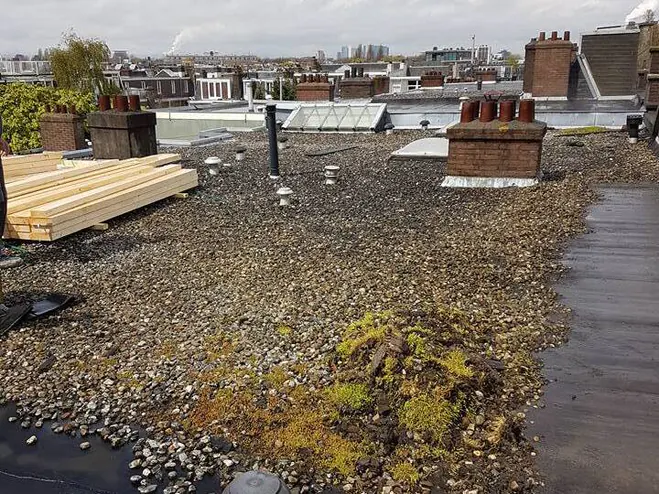
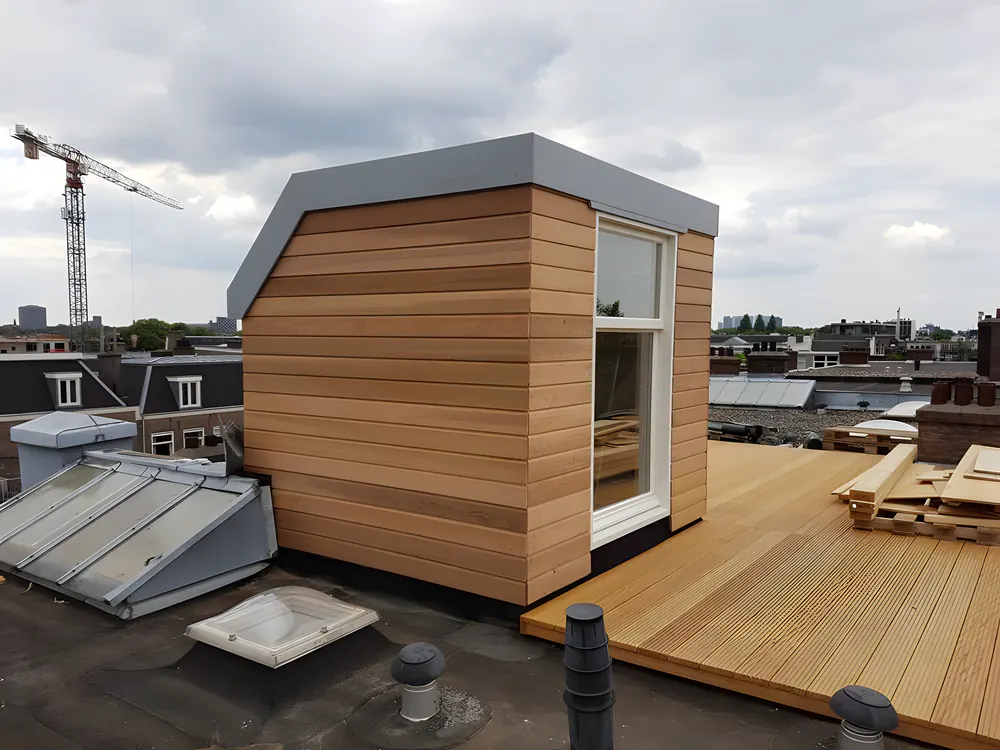 BeforeAfter
Financing an extension can be done in several ways: with savings, by increasing your mortgage, with a construction deposit or with a personal loan. An additional mortgage often has the lowest interest rate, and under certain conditions the interest is tax-deductible if the money goes towards improving your own home. For making the existing house more sustainable, extra schemes are sometimes available. Always get advice from an independent mortgage adviser, and make sure you have an itemised quote as a basis.
The most common route is increasing your mortgage. The lender then looks at your income and at the value of the house after the work. Because an extension makes the house larger, that value may be higher. A valuer determines it on the basis of the drawing and the quote.
When a mortgage is increased for building work, the lender often puts the money in a construction deposit (bouwdepot). You pay the contractor's invoices from that deposit, usually per phase of the work. That way the lender knows the money really goes into the house.
A clear quote with a payment schedule per phase fits in well with this. Make sure the term of the deposit matches the planning, including the time needed for the permit and preparation.
If the borrowed money goes towards improving your own home, such as an extension, the mortgage interest is generally tax-deductible. Among other things, the loan must be repaid at least on an annuity or linear basis within thirty years. Further conditions apply and rules can change, so have this checked by an adviser or with the Dutch Tax Administration.
There is little to gain on VAT: you pay 21 percent on an extension. If you have the existing house insulated at the same time, and it is older than two years, 9 percent applies to the labour for that. See renovating and VAT. For making a home more sustainable there are sometimes grants or loans, such as those from the Nationaal Warmtefonds. Also take a look at sustainable renovation and insulation.
Start with a realistic budget. You can find an indication under how much an extension costs, but for financing you need a quote that describes exactly what will be done. Include a contingency of about 10 percent for the unexpected, and do not forget the kitchen, flooring and furnishings if they are not in the quote.
Bouwbedrijf R. Vlieland puts the budget first: in the first conversation we look at what fits within your financial scope. A tailored quote follows that you can use for your adviser and the valuation. If you are comparing several providers, read choosing a contractor and comparing quotes. More about the building itself can be found under extension.
Lenders often work with the market value after the renovation. That means you can sometimes borrow more than on the basis of the current value. Exactly how much depends on your income and the lender's rules.
Yes, as a rule you do. The lender and the valuer want to know what is being built and what it costs. An itemised quote and a drawing make the application easier.
A personal loan is sometimes used for smaller amounts or when increasing the mortgage is not possible. The interest rate is usually higher than with a mortgage. Have an independent adviser set the options side by side.
Every home is different. After a free, no-obligation visit you receive a clear, tailored quote.
Request a quote Get in touchCall or message Richard Vlieland on +31 6 11 78 63 20, or request a free quote. We are happy to come and have a look.
Request a quote More information